DeeboData

A Powerful Data Grid Library

An efficient, flexible solution with Integrated Charts


What is a Data Grid?

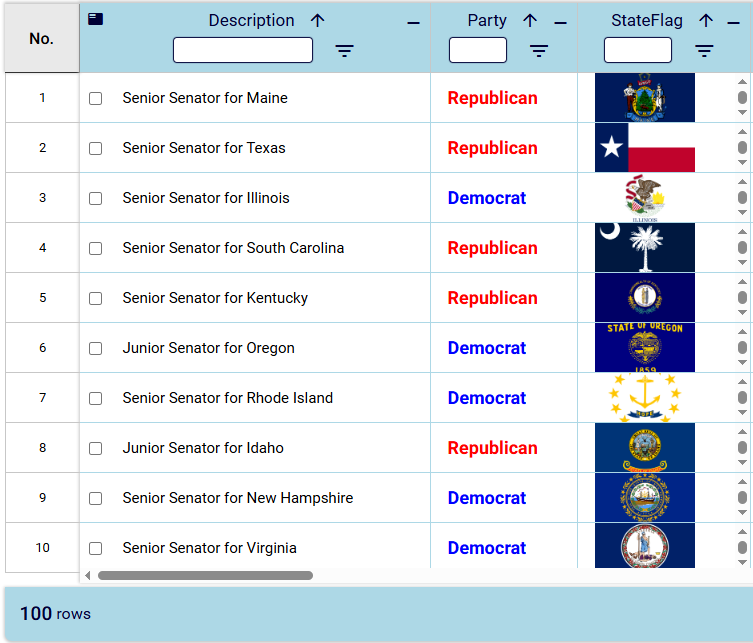
A data grid is a software component that organizes information in a tabular format. There are a wide range of utilities for data grids, but primarily, organizations use them to make beneficial decisions with the data they've collected over time. Tabular format indicates rows and columns. Conventionally, an organization will keep data about specific entities. Each entity has particular attributes (columns) that are of interest to the organization. For instance, if a company wants to track each sale of it's product, it will create a table in a database called Sales. Each row in the Sales table will be made up of the attributes of a single sale. So likely the time, customer ID (who bought the product), product ID (what was the product), and amount of the sale in dollars will be noted. It's a must to give each row a primary key ID, or a value that is unique to a given row. A data grid would simply extract all the information about Sales from the database and then display it neatly in the UI of an app.

Data Grid Capabilities

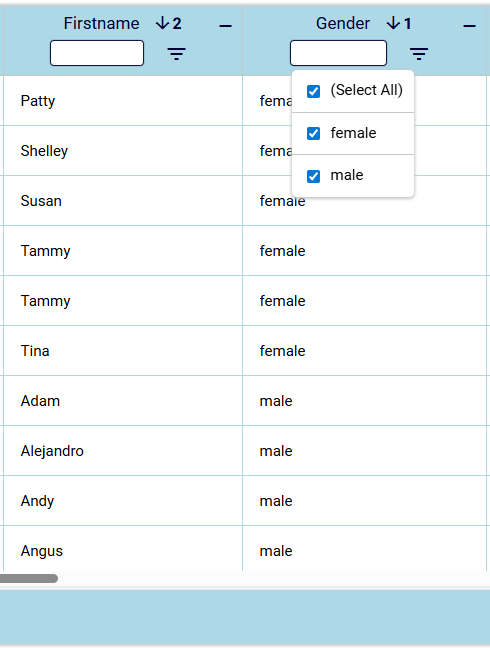
Once the data is displayed nicely in a UI, the users of the app need to be able to analyze the data. So any data grid worth paying for must not be static. In other words, the data on the screen needs to be dynamic and under the control of the user. Our Angular Data Grid provides all the dynamic data analysis capabilities an org needs to extract intelligence from it's data. The grid can filter data accurately by multiple columns, even allowing you to use alternate comparators besides equality. So in a numeric column, you can filter only the values less than or greater than some value. This is enormous for deep data analysis, but it gets better. Sort data by multiple columns. The data grid will help you keep track of all your filters and sorts in the bottom area where the row count appears.

Performance & Reliability

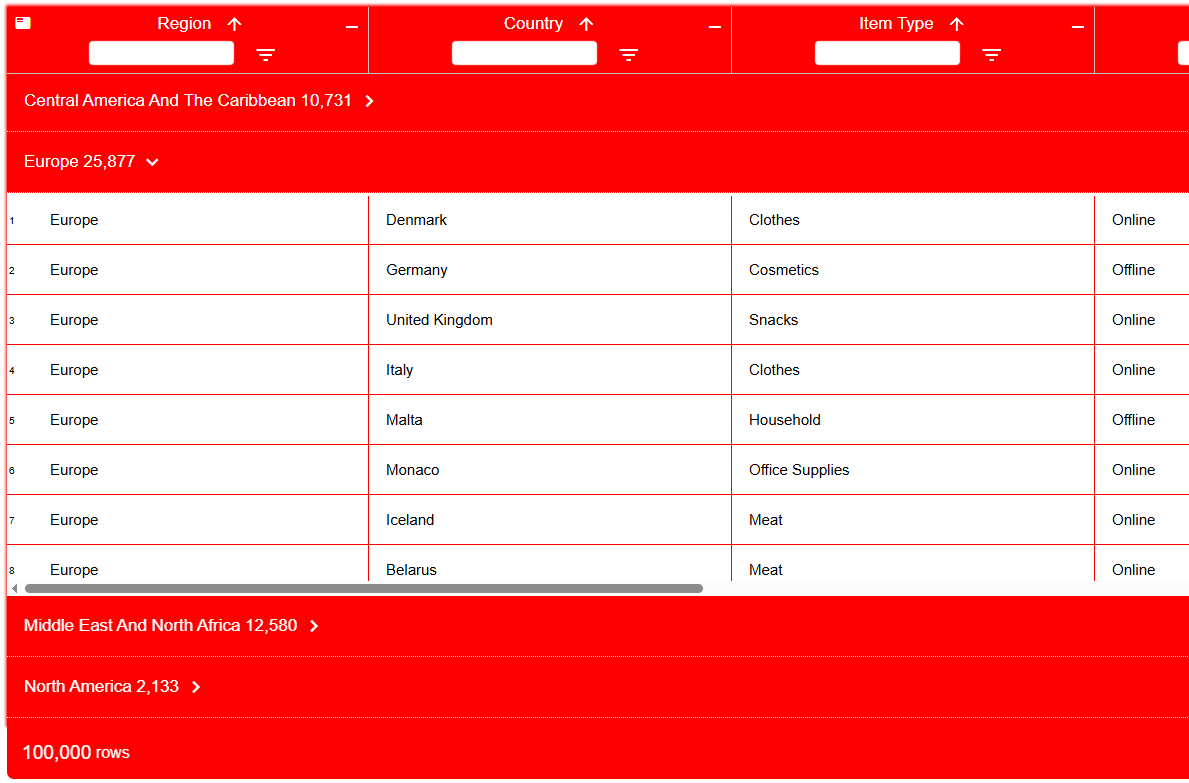
Enterprise data grids separate themselves not only by allowing manipulation of data, but also by doing it quickly. They should be able to handle many thousands of rows of data easily and without eating up too much memory. We achieve this with our data grid via row virtualization. This is a software engineering technique that basically only renders the bare minimum number of rows, manifested as html elements in the UI. That's what allows you to scroll from row 1 to row 100,000 in an instant and land in the right spot without tons of latency or unresponsiveness in your browser.